Commercial General Contractors Miami
Authors
Sebastian Olarte

About the Author: Sebastian Olarte is the Founder and Lead Architect of Blanco Design + Build, a Miami Beach–based design and construction firm specializing in fully integrated, custom single-family homes. He holds a degree in Architecture with a minor in Fine Arts and Graphic Design from Florida Atlantic University and began his career with established studios including Pavlik Design Team and Gustavo Carbonel.
Sebastian founded Blanco in 2010 to close the gap between architectural design and construction execution. His design process starts with a close study of site conditions — climate, light, wind, landscape, and neighborhood context — before form takes shape. Influenced by international travel and a background in art and graphic composition, his work balances restraint, proportion, and constructability, ensuring custom homes move from concept to completion with clarity and continuity.
Hank Bush

About the Author: Hank Bush is CEO of Blanco Design + Build, bringing more than 26 years of experience across real estate development, construction, and project execution. Raised in Georgia, Hank entered the construction and real estate industry at a young age before ultimately choosing a career in development.
His background includes co-founding Southern Investment Associates in Atlanta, leading large-scale adaptive reuse projects and mixed-use developments such as the Lenox Collection, and pioneering office condominium conversions along Brickell Avenue in Miami. Hank joined Blanco in 2019 to apply his operational and construction expertise within a fully integrated design-build model, where he focuses on execution, risk management, and aligning architectural ambition with disciplined construction delivery.
Esteban Navia

About the Author: Esteban Navia is Director of Construction and Director of Operations at Blanco Design + Build. Born and raised in Mexico within a family rooted in residential construction, he developed hands-on building skills from an early age before pursuing formal studies at ITESO and graduating from Florida International University with a Bachelor of Science in Civil Engineering.
Esteban joined Blanco through field-level collaboration, progressing from job-site operations to Assistant Project Manager, Project Manager, and into his current leadership roles. He oversees project delivery, quality assurance, and construction strategy while working across departments to strengthen internal systems, streamline processes, and elevate company-wide operational performance.
More Resources
Miami’s commercial market is unforgiving. Brickell tower fit-outs, Coral Gables ground-up office space, Wynwood adaptive reuse, and Design District retail all contend with the same realities: a permitting environment among the strictest in the country, hurricane-impact construction standards, FEMA elevation rules, and a pace of capital that punishes delay. The general contractor shapes more than the finished space — it guides the timeline, budget integrity, and predictability of the entire process.
This guide walks through what to evaluate when hiring a general contractor for commercial work in Miami: pricing realities at the high end, licensing and compliance fundamentals, subcontractor management, hurricane-resilient construction, references, delivery speed, and the specialized capabilities required for historic conversions and luxury renovations.
Key takeaways
- Miami’s commercial construction market is shaped by hurricane-impact requirements (NOAs), FEMA elevation rules, and one of the most demanding permitting environments in the country — the right GC is fluent in all three before drawings are finalized.
- Realistic, all-in pricing is built from constructability review and value engineering applied early, not from generic per-square-foot estimates that balloon during construction.
- Licensing (CGC), bonding, and insurance are the floor; the differentiators are subcontractor discipline, regional code mastery, and partnership-level engagement with the firm’s leadership.
- The firms that architects and designers actually call back are those that protect design intent through stage-gate sequencing, transparent change-order management, and on-site supervision under pressure.
- Blanco operates in both modes — fully integrated design-build, or general contractor for a project with its own architect — with the same regional discipline applied to either delivery model.
Commercial Construction Costs Per Square Foot in Miami
Unfortunately, cost-per-square-foot is not a good baseline metric for most projects. Construction costs in Miami vary widely with project type, finish level, and site conditions. The general market figures place the range from roughly $200 to $500 per square foot. For high-end work — branded condo white-box build-outs, boutique hospitality, custom retail, executive office space, or even high-end residential homes — the upper end of that range is the starting point. Recent regional benchmarking places hard costs for commercial construction across the South between approximately $240 and $680 per square foot, with luxury programs in Miami consistently tracking toward and past the high end of that band.
Several factors drive that calibration. Impact-rated glazing, hurricane-rated envelopes, and Miami-Dade Product Approval compliance carry premiums over generic equivalents. Custom millwork and premium MEP systems characteristic of commercial work add multiples over baseline. Site conditions in Miami’s coastal corridors — elevated foundations to meet FEMA requirements, dewatering on near-water sites, restricted urban staging — affect both schedule and cost. And the permitting overhead in Miami-Dade is substantive: plan reviewer cycles, multiple inspection phases, and the documentation required to satisfy local product-approval rules all carry real cost.
The most reliable indicator that a budget is realistic is whether it is built from a constructibility review rather than a unit-price estimate. Top commercial general contractors in Miami price the work the way the work will actually be built — by sequencing, by trade scope, by site logistics, and by the actual code and permitting path. Smaller commercial general contractors in Miami may offer more direct access to leadership and a tighter scope of trades, while larger firms bring broader subcontractor benches; commercial general contractors in Miami, Florida, that operate across both scales price with the same discipline either way. The differentiator is value engineering applied early — before drawings are finalized — so cost decisions are made when they still influence design.
For broader context on residential cost benchmarks in the same market, see “How much does it cost to build a house in Miami?“

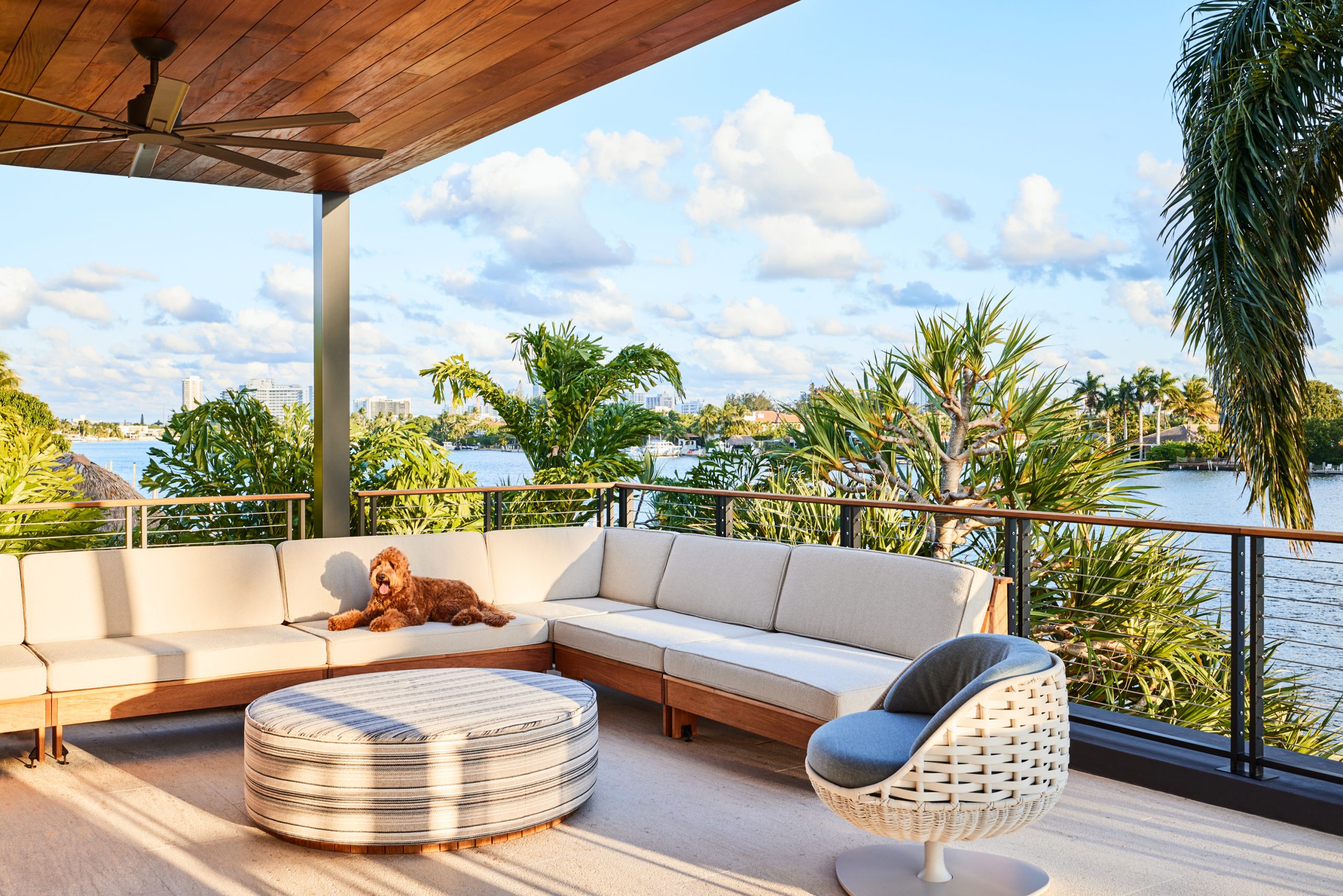

Every Phase, Executed at the Same Standard
Core-and-shell, build-out, residential homes, or anything in-between. Blanco Design + Build is ready to start at any stage your project requires, and coordinates with architects, designers, and other key stakeholders.
Verifying a Miami Commercial GC's Licensing and Compliance
Licensing and compliance are the floor, not the ceiling, of contractor qualification. In Florida, commercial general contractors must hold a Certified General Contractor (CGC) license issued by the Florida Department of Business & Professional Regulation. The CGC authorizes work without scope or square-footage restrictions and is the appropriate license for any sizable commercial build in Miami. Verification is straightforward:
- Confirm the CGC number on the Florida DBPR license search.
- Confirm Miami-Dade County contractor registration through the Miami-Dade Building Department.
- Request current certificates of insurance — general liability, workers’ compensation, and any required umbrella coverage — listing the property and the principal as additional insured.
- Request bonding capacity documentation. For commercial work, being bonded and insured is the baseline; sophisticated principals also ask about single-project and aggregate bonding limits.
- Ask for the firm’s prequalification packet — the document set most architects and developers use to vet GCs before invitations to bid.
A complete pre-qualification package goes beyond the license number. It includes recent project history with performance data, a current subcontractor list across mechanical, electrical, plumbing, custom millwork, concrete, and waterproofing, references from architects and design teams, safety record (EMR), and continuity of leadership on signed contracts.
Compliance fluency also extends to local code mastery — the Florida Building Code as adopted by Miami-Dade, the Miami-Dade Product Approval regime, FEMA flood zone requirements for waterfront and low-elevation parcels, and the city- and village-specific permitting workflows in Coral Gables, Coconut Grove, Miami Beach, Pinecrest, and Key Biscayne. A commercial general contractor in Miami who treats licensing as a finish line is not the firm to hire for sophisticated work. The firms worth hiring treat it as the starting point.
For the distinction between license types in Florida, see “What is the difference between CGC and CBC in Florida?“
How Top Commercial GCs Vet and Manage Subcontractors
Subcontractor management is where commercial GC promises become concrete outcomes. The trades execute the work; the GC’s discipline determines whether they execute it on schedule, in scope, and at the level the design team specified. Top commercial general contractors in Miami operate from a stable subcontractor bench cultivated over years — mechanical, electrical, plumbing, custom millwork, structural concrete, waterproofing, hurricane-rated glazing, fire and life safety, low-voltage and AV — selected on a combination of technical capability, schedule reliability, and willingness to meet the documentation rigor that high-end commercial work requires.
The vetting process for new subs is not a checklist. It includes a portfolio review at a comparable scale and complexity, references from other GCs and architects, a financial review where appropriate, and a constructability conversation about specific scope items. The best Miami Beach general contractors and their counterparts across Miami-Dade and Broward run a stage-gate process: subs commit to scope and schedule before any work is sequenced, and that commitment is documented in the schedule of values and tracked through change-order management.
On-site management is where the difference becomes visible. A daily superintendent presence, weekly trade coordination meetings, two-week look-ahead schedules, transparent schedule-of-values reporting, and proactive documentation of every field change are baseline requirements. In Miami specifically, where weather, supply chain pressure on impact-rated and imported materials, and inspection schedules can compress quickly, the firms that perform well are the ones with the discipline to absorb disruption without losing the schedule. Job sequencing — the order in which trades enter, overlap, and exit a space — is often the single largest determinant of whether a Miami commercial build delivers on time. The firms that get this right tend to be the same firms that will offer the best management of your project.
Hurricane-Resilient Construction: What to Look For in a Miami GC
South Florida is not a generic build market. It is a high-investment and highly regulated environment where the building envelope must perform against design wind speeds approaching 175 mph, where openings require Miami-Dade Notice of Acceptance (NOA) product approval for impact resistance, and where coastal sites must be elevated to satisfy FEMA flood requirements with appropriate freeboard. The best commercial general contractors in Miami are fluent in these requirements before drawings are finalized.
Fluency shows up in concrete ways. Impact-rated glazing systems with current NOAs — ES Windows, La Finestra, and equivalents — are sourced and submitted with permit packages, not improvised after bid. Reinforced concrete is detailed for tie-down continuity, with proper anchor schedules and inspection coordination. Roofing systems are certified for the relevant uplift category, with NOA documentation on every component from membrane through fasteners. Flood-resistant detailing on at-risk parcels — elevated mechanical equipment, dry floodproofing where allowable, FEMA-compliant openings on understory or non-habitable space below freeboard — is engineered into the drawings, not negotiated during inspection. And every one of those decisions is coordinated with the relevant authority: Miami-Dade, Coral Gables, Miami Beach, Fort Lauderdale, and the smaller municipalities often have additional design review boards layered on top.
The firms worth hiring for resilient construction integrate code research, constructability reviews, and engineering coordination from day one. When the same team manages design and construction — or when the GC works in close lockstep with an outside architect of record from concept onward — these requirements are addressed in the drawings, not negotiated during punch list. That integration is what separates commercial general contractors in Miami, Florida, capable of high-stakes work from generalists who will discover this elevation in the second permit comment cycle.
For more on contractor vetting and red flags, see “What are the signs of a bad contractor?“
Finding Reviews and References for Miami Commercial General Contractors
Online reviews are a starting point — Google reviews and the firm’s own published case studies offer the best signals for the quality of their work, client satisfaction, and if their past work matches the ambitions of your current project.
For a sub-million-dollar project, online commercial general contractors’ Miami reviews may be sufficient diligence. For high-end commercial work, they are not. The references that matter at this scale come from professionals who have worked with the firm at depth: architects who have specified a complex detail and watched the GC execute it; interior designers who have seen the firm hold the line on a custom millwork installation; developers who have tracked schedule and budget performance over a multi-phase engagement; structural engineers who have observed how the GC handles RFIs and field conditions.
Top commercial general contractors in Miami offer this kind of reference openly. They maintain a project list organized by type — office, hospitality, retail, residential, white-box condo build-out, mixed-use — with completion dates, budgets relative to original contract, and primary contacts willing to take a vetting call. They may also participate in the professional community: the Construction Association of South Florida, AGC Florida East Coast, ABC Florida East Coast. A presence in those networks does not guarantee quality, but its absence is informative.
When evaluating references, ask the harder questions: how the firm handled unforeseen site conditions, how change orders were communicated and priced, what the field supervisor was like to work with, how punch list and close-out were managed, and whether the architect or designer would hire them again on a project where the design intent is non-negotiable.
For more on vetting local contractors, see “How do I find a local contractor?“
How Leading Miami GCs Deliver on Timeline and Speed
Schedule performance in Miami commercial work is a function of three things: how early the constructability and pricing conversations begin, how stable the subcontractor bench is, and how disciplined the on-site coordination remains under pressure.
An integrated delivery model — where design, engineering, permitting, and construction sit under one team rather than four contracts — produces a measurable schedule advantage. Research on design-build delivery indicates these projects can run as much as 33% faster than traditional design-bid-build, in part because design and construction phases overlap rather than sequence, and in part because there is no coordination gap between architect and GC. For Blanco, the integrated model reliably delivers projects two to three months faster than the South Florida industry average — not as a marketing claim, but as the predictable output of in-house architecture, engineering, value engineering, and permit coordination running in parallel from day one.
For commercial general contractors in Miami operating in GC-only mode — working with an outside architect of record — schedule discipline depends on how early the GC is brought into the design conversation. The best commercial general contractors in Miami participate during late schematic and design development, not because they want to redesign the work, but because constructability review at that stage prevents change orders later. They lock in long-lead items — impact-rated glazing, custom millwork, MEP equipment — on a procurement schedule tied to the construction schedule. They maintain a stable subcontractor bench so the trades are not bid out on every project, which itself adds weeks. And they run a daily superintendent presence with a weekly trade coordination cycle that catches schedule slippage early enough to absorb it.
Speed in Miami is not a function of working faster. It is a function of fewer surprises. Our firm employs a design-build model so that we can lead every project with in-house architects, designers, and builders, while also allowing us the flexibility to work with a client’s chosen architect. Look for a firm that might be able to provide this level of support.
For a deeper comparison, see “How Project Management Style Shapes Timelines Among Top Commercial General Contractors.“
Miami Beach General Contractors with Experience in Historic Conversions
Historic conversions in Miami Beach — the South Beach Art Deco district, the Mid-Beach corridor, the bayfront mansions of La Gorce and Sunset Islands — sit at the intersection of preservation discipline and modern construction. The work requires fluency with the Miami Beach Historic Preservation Board, familiarity with the city’s Design Review Board process, and the technical capability to upgrade structural, mechanical, and life-safety systems to current code while preserving the architectural elements that gave the building its designation in the first place.
The best Miami Beach general contractors for this work share a few characteristics. They have completed adaptive reuse and restoration projects with documented preservation board approvals. Their subcontractor bench includes specialty trades — historic plaster, terrazzo restoration, period-correct casework, hurricane-rated glazing detailed to match original sightlines — that most general contractors do not engage on routine builds. They run permit coordination directly with preservation staff rather than treating it as a normal building department submittal. And they understand the sequencing implications of preservation: certain trades must enter and exit the work in a specific order to protect original fabric.
For Miami construction companies vetting projects of this kind, the question is not whether the firm has built in Miami Beach. It is whether the firm has built in Miami Beach under a designation, with a preservation board on the approval path, and delivered the project with both regulatory compliance and architectural integrity intact. Their portfolio either reflects that, or it does not.
Your Commercial GC for the Extraordinary
When the space is an extension of your business’s brand — not a backdrop to it — Blanco Design + Build delivers construction at a standard the ordinary GC can’t match.
Modern and Luxury Renovation Contractors in the Miami Area
Modern and luxury renovations — whether a Coral Gables Mediterranean Revival for a contemporary collector, a Coconut Grove waterfront residence reconfigured for a multigenerational compound, or a Miami Beach commercial space reframed as a flagship retail or office build-out — share a common requirement: technical mastery applied with restraint. The work cannot impose itself upon the space it occupies. It must serve the intent of the existing structure and the vision of the new construction simultaneously.
The hallmarks of contractors fluent in this work include a portfolio of design-driven renovations with named architects of record, direct involvement of principals throughout the project rather than an account-manager intermediary, mastery of premium materials (coral stone, Ipe, Kumaru, honed limestone, board-formed concrete, custom millwork in matched veneers), smart-home integration on platforms like Control4 commissioned end-to-end, and the discipline to deliver turn-key — finishes, systems, landscape, and warranty — so the principal walks into a completed space.
Smaller, principal-led firms — including small commercial general contractors in Miami, Florida, operating in the boutique tier — often deliver exceptional work on focused renovation programs because the leadership stays involved through every decision. Larger firms bring scale and trade depth that complex programs require. The best commercial general contractors in Miami operating at the high-end share one trait regardless of size: the principal partner remains accessible through every stage of the work.
Blanco operates in both modes. As a fully integrated luxury home builder and design-build team, the firm can carry new home and commercial projects from initial site evaluation and code research through turn-key delivery. As a residential or commercial general contractor for clients with their own architect, Blanco brings the same execution discipline — value engineering applied early, in-house permit coordination, platforms like BuilderTrend for client transparency through certificate of occupancy, and a warranty period followed by concierge maintenance. Both modes are first-class; neither is a fallback.
Hiring a Commercial General Contractor in Miami
Hiring a commercial general contractor in Miami is, fundamentally, a decision about whom to trust with the integrity of a high-investment program in a high-friction market. License and insurance are the floor. The differentiators are above the floor: regional code fluency, subcontractor discipline, schedule and budget performance under pressure, and the willingness of the firm’s leadership to remain personally engaged through certificate of occupancy.
To begin a conversation about a commercial build, renovation, or fit-out anywhere in Miami-Dade, Broward, or Palm Beach, request your meet & greet with Blanco’s leadership. We operate as a fully integrated design-build team or as the general contractor for a project with its own architect of record — the same regional mastery and partnership-level engagement applied to either model.
Breathtaking Doesn’t Happen by Accident
When your vision of the perfect home is in the balance, you deserve a luxury home builder that protects that vision long before construction begins. Let’s chat about how our in-house Blanco architects and home builders can commission your dream home.
Authors
Sebastian Olarte
About the Author: Sebastian Olarte is the Founder and Lead Architect of Blanco Design + Build, a Miami Beach–based design and construction firm specializing in fully integrated, custom single-family homes. He holds a degree in Architecture with a minor in Fine Arts and Graphic Design from Florida Atlantic University and began his career with established studios including Pavlik Design Team and Gustavo Carbonel.
Sebastian founded Blanco in 2010 to close the gap between architectural design and construction execution. His design process starts with a close study of site conditions — climate, light, wind, landscape, and neighborhood context — before form takes shape. Influenced by international travel and a background in art and graphic composition, his work balances restraint, proportion, and constructability, ensuring custom homes move from concept to completion with clarity and continuity.
Hank Bush
About the Author: Hank Bush is CEO of Blanco Design + Build, bringing more than 26 years of experience across real estate development, construction, and project execution. Raised in Georgia, Hank entered the construction and real estate industry at a young age before ultimately choosing a career in development.
His background includes co-founding Southern Investment Associates in Atlanta, leading large-scale adaptive reuse projects and mixed-use developments such as the Lenox Collection, and pioneering office condominium conversions along Brickell Avenue in Miami. Hank joined Blanco in 2019 to apply his operational and construction expertise within a fully integrated design-build model, where he focuses on execution, risk management, and aligning architectural ambition with disciplined construction delivery.
Esteban Navia
About the Author: Esteban Navia is Director of Construction and Director of Operations at Blanco Design + Build. Born and raised in Mexico within a family rooted in residential construction, he developed hands-on building skills from an early age before pursuing formal studies at ITESO and graduating from Florida International University with a Bachelor of Science in Civil Engineering.
Esteban joined Blanco through field-level collaboration, progressing from job-site operations to Assistant Project Manager, Project Manager, and into his current leadership roles. He oversees project delivery, quality assurance, and construction strategy while working across departments to strengthen internal systems, streamline processes, and elevate company-wide operational performance.
More Resources
Categories
Categories
Latest Posts

What are the best Miami neighborhoods to build a custom home?
From waterfront enclaves to historic neighborhoods, South Florida offers a rare range of settings

A Realistic Timeline for Building a Luxury Home in Florida
Successful luxury home builds in Florida prioritize sequencing and foresight over speed, creating more

5 Popular Luxury Home Design Styles, Trends, and Techniques
These popular styles, trends, and techniques emerge from questions about site, lifestyle, materials, and