General Contractor Miami-Dade
Authors
Sebastian Olarte

About the Author: Sebastian Olarte is the Founder and Lead Architect of Blanco Design + Build, a Miami Beach–based design and construction firm specializing in fully integrated, custom single-family homes. He holds a degree in Architecture with a minor in Fine Arts and Graphic Design from Florida Atlantic University and began his career with established studios including Pavlik Design Team and Gustavo Carbonel.
Sebastian founded Blanco in 2010 to close the gap between architectural design and construction execution. His design process starts with a close study of site conditions — climate, light, wind, landscape, and neighborhood context — before form takes shape. Influenced by international travel and a background in art and graphic composition, his work balances restraint, proportion, and constructability, ensuring custom homes move from concept to completion with clarity and continuity.
Hank Bush

About the Author: Hank Bush is CEO of Blanco Design + Build, bringing more than 26 years of experience across real estate development, construction, and project execution. Raised in Georgia, Hank entered the construction and real estate industry at a young age before ultimately choosing a career in development.
His background includes co-founding Southern Investment Associates in Atlanta, leading large-scale adaptive reuse projects and mixed-use developments such as the Lenox Collection, and pioneering office condominium conversions along Brickell Avenue in Miami. Hank joined Blanco in 2019 to apply his operational and construction expertise within a fully integrated design-build model, where he focuses on execution, risk management, and aligning architectural ambition with disciplined construction delivery.
Esteban Navia

About the Author: Esteban Navia is Director of Construction and Director of Operations at Blanco Design + Build. Born and raised in Mexico within a family rooted in residential construction, he developed hands-on building skills from an early age before pursuing formal studies at ITESO and graduating from Florida International University with a Bachelor of Science in Civil Engineering.
Esteban joined Blanco through field-level collaboration, progressing from job-site operations to Assistant Project Manager, Project Manager, and into his current leadership roles. He oversees project delivery, quality assurance, and construction strategy while working across departments to strengthen internal systems, streamline processes, and elevate company-wide operational performance.
More Resources
Building in Miami-Dade is a high-investment, highly regulated, climate-sensitive undertaking. The contractor a principal selects shapes every part of the work that follows — site preparation, sequencing, value engineering, permit coordination, certificate of occupancy. This guide is for the principal weighing that decision: a homeowner planning a custom residence in Coral Gables or Coconut Grove, or a commercial owner commissioning a tenant build-out, hospitality property, or boutique development. It covers the distinctions between contractor types, the credentials that matter on work, and the diligence that separates a builder you can trust with a multi-million-dollar project from one you cannot. For the broader view of how the work is delivered in this market, see our General Contractors overview.
Key takeaways
- The right general contractor in Miami-Dade is selected for regional fluency and process discipline — not surface-level credentials.
- Residential and commercial general contracting share fundamentals but diverge meaningfully on licensing, code path, and project management.
- License and insurance verification is non-negotiable, and the documentation standard for work is higher than the entry-level baseline.
- Direct partnership with a firm’s leadership is what separates a principal-grade engagement from an account-managed one.
- All-in, transparent pricing — not a base-build number — is the most reliable indicator of how a project will end.
What is the difference between a general contractor and a commercial contractor?
A general contractor in Miami-Dade manages the full scope of a construction project: site preparation, subcontractor coordination, schedule control, code compliance, and the final walk-through through certificate of occupancy. The work spans both residential and commercial domains when the firm is structured for both. A commercial general contractor focuses on business-driven work — office space, retail, hospitality, medical, restaurant build-outs — where the operating logic, code path, and trade coordination are different from a custom home.
The distinction matters most where it intersects with execution:
- Residential general contractors lead custom-home work where finish quality, lifestyle integration, and indoor-outdoor design dominate the program. The trades are weighted toward custom millwork, stone, glazing, mechanical systems sized for a single household, and luxury features — pools, kosher kitchens, automotive galleries with custom lifts, wellness areas.
- Commercial general contractors lead tenant build-outs, core-and-shell construction, and hospitality projects. The work draws on ADA compliance, life-safety systems, larger HVAC and electrical loads, occupant-load calculations, and the trade depth required to deliver against a tenant or operator’s schedule.
In Miami-Dade, both modes are shaped by the same regional realities: FEMA elevation requirements, hurricane-impact ratings, and a permitting process that rewards builders who know how to move plan reviews through the system. A contractor fluent in Miami-Dade Notice of Acceptance (NOA) standards for impact-rated glazing — and in the wind-load engineering required to satisfy them — delivers a project that is not just code-compliant but resilient. That fluency reads on a residential project and a commercial one alike.
The line is less binary in firms structured for both. Blanco operates as a fully integrated design-build team for custom homes and as a high-end general contractor for select commercial work — the same caliber of execution, the same partnership model, applied where the program calls for it. For clients looking for high-end work, that dual-mode capability eliminates the need to source separate teams for a primary residence and a private commercial project.
For a closer look at how this plays out in practice, see our resource for residential vs. commercial general contractors in the Miami area.
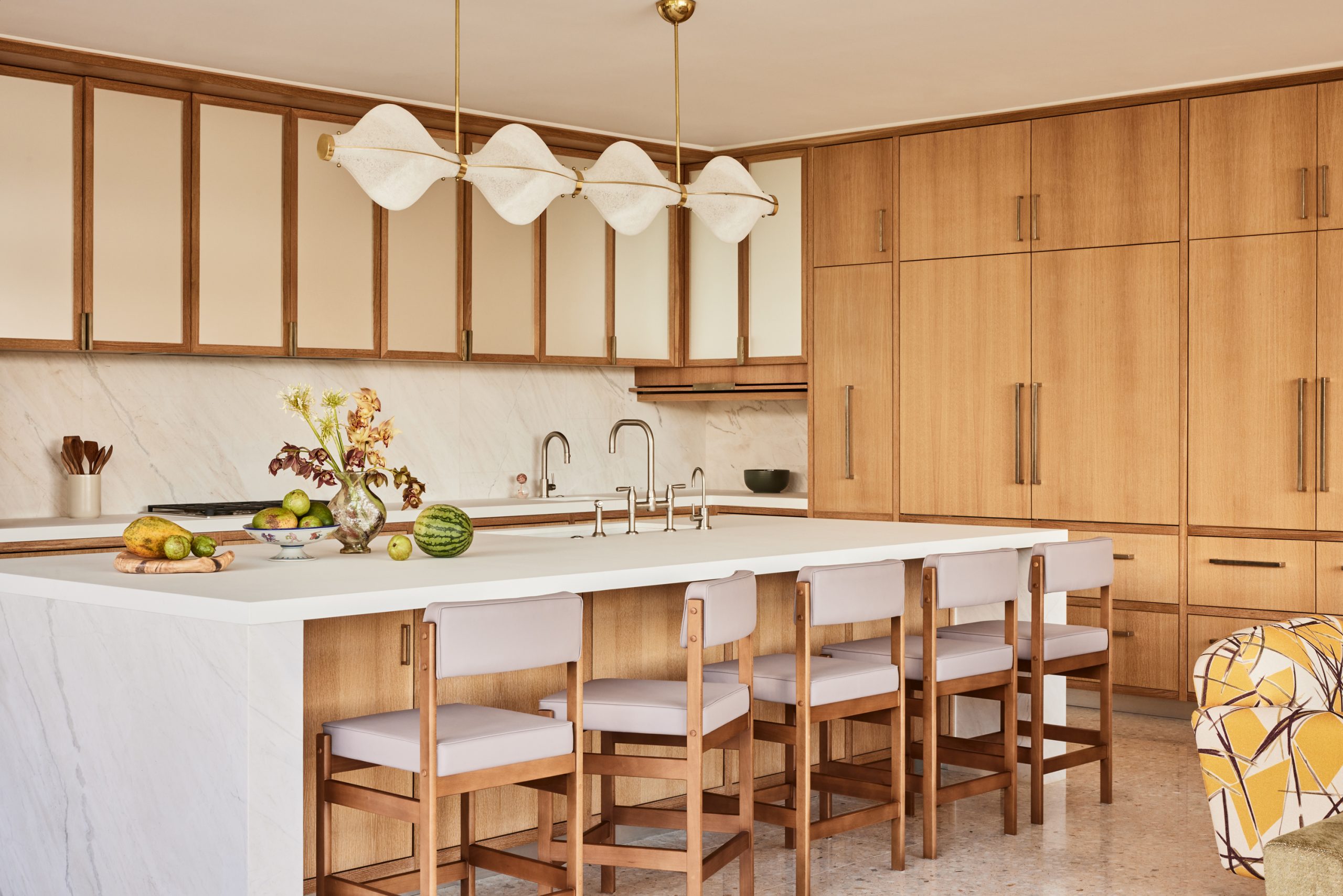
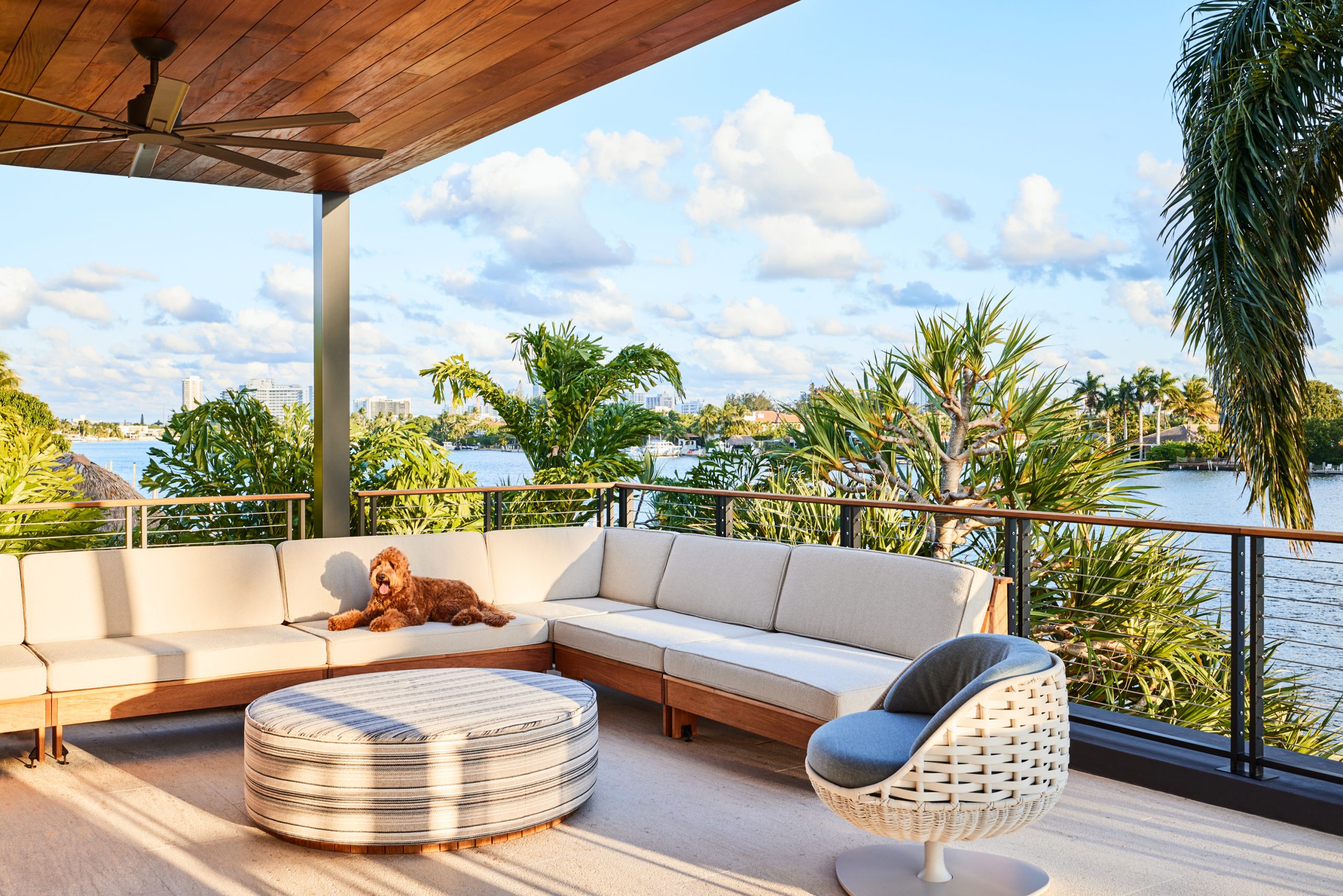
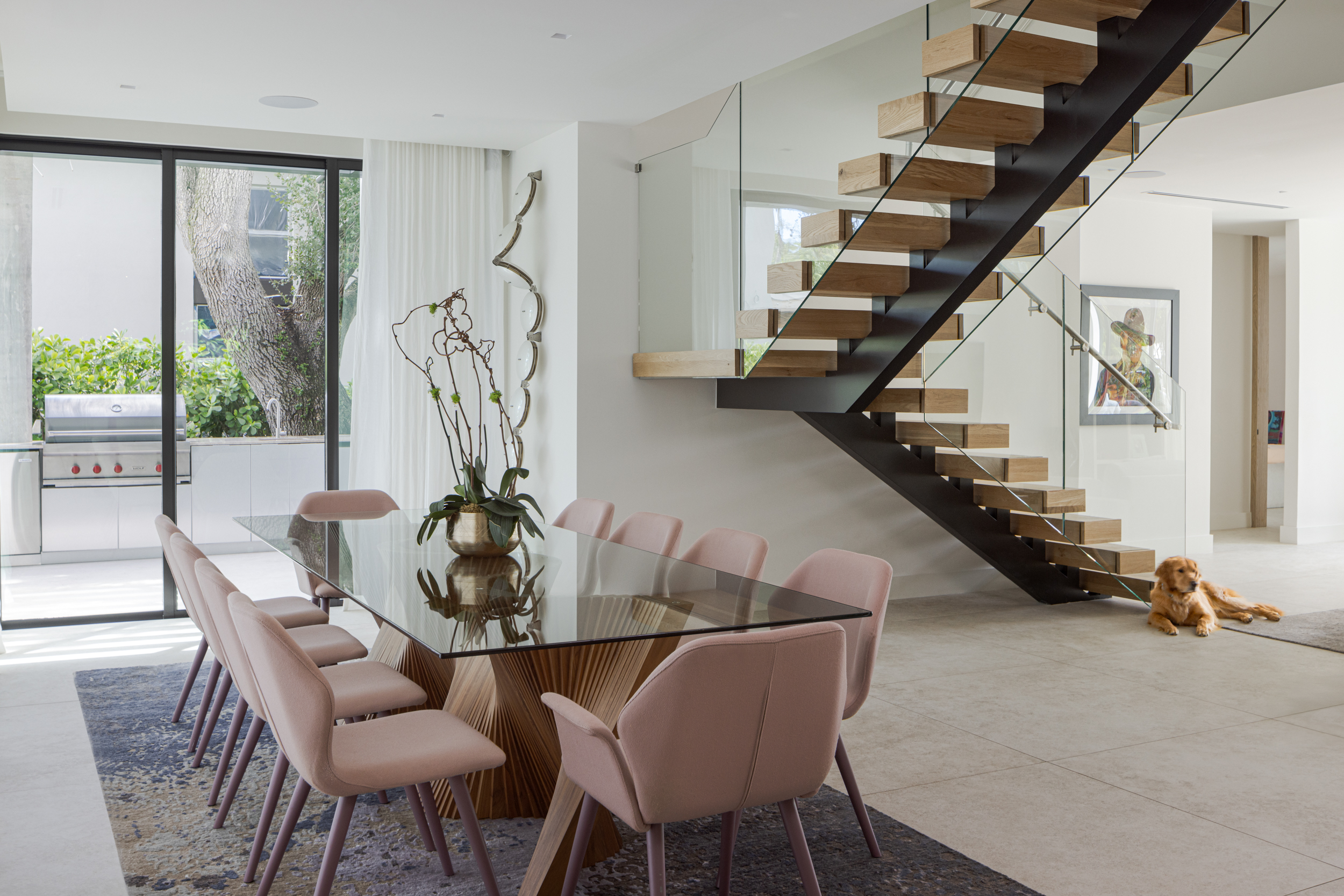
Every Phase, Executed at the Same Standard
Core-and-shell, build-out, residential homes, or anything in-between. Blanco Design + Build is ready to start at any stage your project requires, and coordinates with architects, designers, and other key stakeholders.
Choosing Between a Residential General Contractor and a Commercial Contractor
Match the contractor to the program. The decision turns on four factors.
- Expertise: A residential general contractor in Miami-Dade should bring a portfolio of completed full building projects. Commercial general contractors should demonstrate experience in the relevant building type: hospitality is not retail, medical is not office, and a high-end restaurant build-out is not a standard tenant fit-out. Track record on the specific category is the diligence that matters. Most importantly, a firm’s portfolio should indicate the type of quality that you want on your project. Firms with high standards and expert craftsmanship can often execute outside of their typical project type.
- Licensing: Florida licensing structure distinguishes between the Certified General Contractor (CGC) license, which permits unlimited-scope work over three stories, and registered contractors, who are limited to local jurisdictions. High-end residential projects and most commercial work require a CGC. Confirm the license type, the named principals, and the active status before any other diligence.
- Project management discipline: Full building work — ground-up custom home or new commercial space — demands disciplined sequencing, a clear schedule of values, and proactive change-order management. Renovation experience does not transfer cleanly to ground-up construction. Ask candidates to describe their job sequencing on a project of comparable scope and watch for specificity in the answer.
- Delivery model: Some clients arrive with an outside architect already engaged and need an executor. Others want one team responsible for design, engineering, permitting, and construction. The right contractor is candid about which mode fits the project — and is built to deliver in either.
A single-source delivery model — design and construction under one contract — closes the coordination gaps that drive cost and schedule overruns on traditionally fragmented projects. A general-contracting engagement built around someone else’s drawings can do the same when the GC understands how to read a design package as the architect intended and execute it without dilution. Both modes are first-class engagements in firms structured for both. Neither is a fallback.
What separates a partner from a vendor in either mode is direct access to leadership. On luxury work, principals should expect to work with the firm’s owners and senior project leadership through the life of the build — not with an account manager who routes questions back to the people doing the work. The same model holds on commercial projects, where the consequences of a coordination gap are measured in days of lost operating revenue.
Speed of delivery is the other variable worth weighing. A contractor with in-house architecture, engineering, and construction can resolve field issues in hours, not weeks. Projects delivered through an integrated model regularly run two to three months ahead of the South Florida industry average — the result of seamless internal coordination, not shortcuts.
For more on how project management styles affect outcomes, see our article on how project management styles shape timelines among top Miami general contractors.
Verifying Licenses and Insurance for a Miami-Dade General Contractor
Verification is non-negotiable, and on luxury projects the documentation bar is higher than it is for entry-level residential work. Standard diligence:
- Confirm an active license through the Miami-Dade contractor license search and the Florida Department of Business and Professional Regulation. Verify license type (CGC for unlimited-scope work) and the principals named on the license.
- Request certificates of insurance for general liability and workers’ compensation, and confirm the policy limits are appropriate for the project’s contract value. On luxury residential and commercial work at this caliber, expect general liability limits in the millions, not the hundreds of thousands.
- Cross-check license numbers and expiration dates against the official records. A license that expires mid-project is a permitting risk, not a paperwork detail.
- Review compliance with the specific Miami-Dade requirements for your project type — including any neighborhood architectural review boards (Coral Gables Board of Architects, Miami Shores Design Review Board, Village of Pinecrest review processes).
Beyond compliance, established Miami-Dade general contractors maintain documentation that signals depth: a portfolio organized by project type, on-time and on-budget performance records, named subcontractor relationships across the major trades (mechanical, electrical, plumbing, custom millwork, glazing, waterproofing), and bonding capacity sufficient for the project size. The most credible firms share that documentation without prompting.
Pricing posture is the last verification step — and frequently the most revealing. The reputable firms in Miami-Dade work from an ‘honest numbers’ philosophy: realistic, all-in price ranges that include permits, landscaping, pools, smart-home commissioning, and finishes. A base-build number that excludes the items required to actually occupy the home is not a contract; it is the start of a renegotiation. Home and business owners should treat pricing transparency as a verification step on par with licensing.
For more on credential verification, see our article on how to verify a general contractor in Miami Beach.
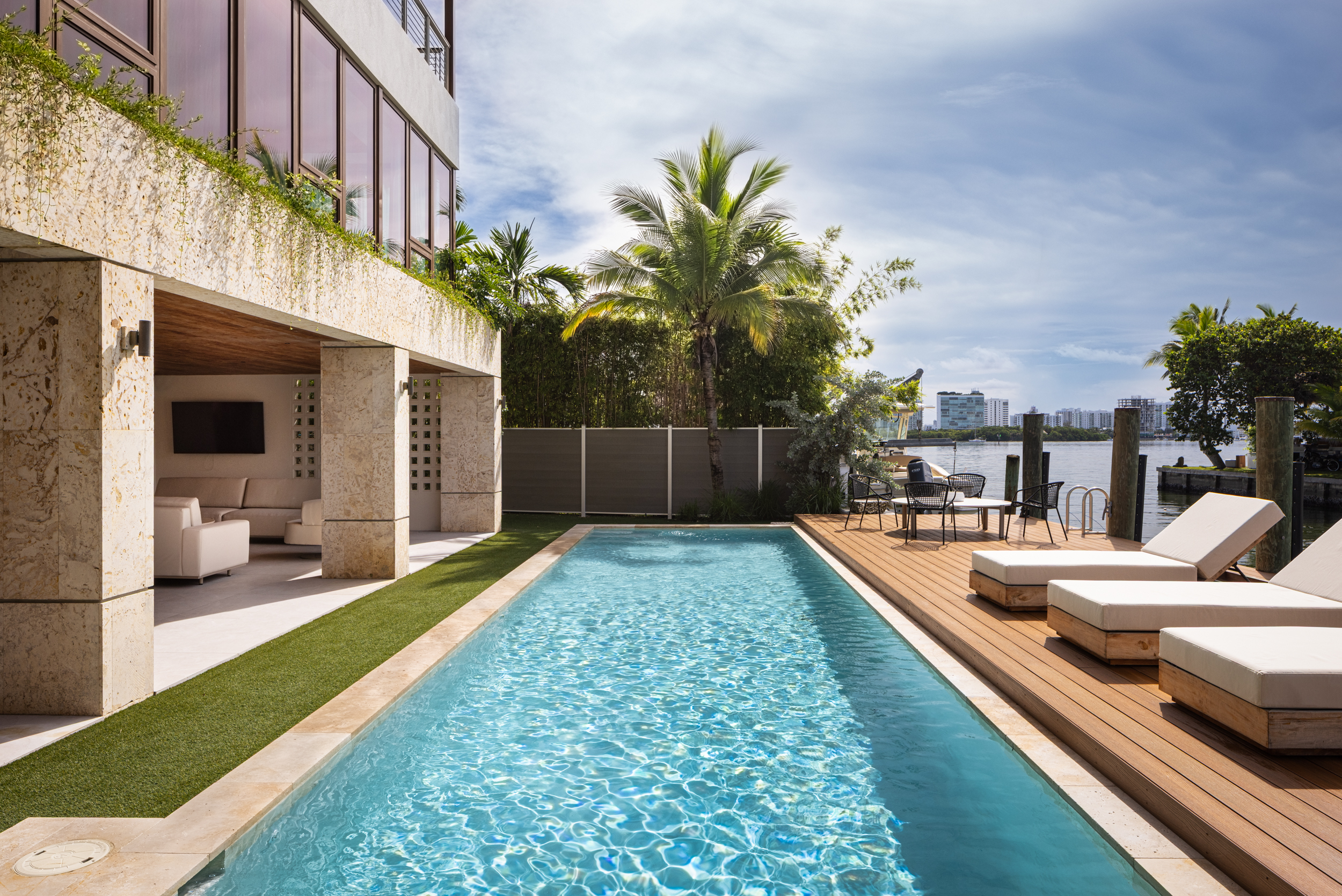
Choosing a Reliable General Contractor
Once compliance is established, the selection turns to fit and process. The criteria that matter most:
- Experience on full building projects. A portfolio of completed signature residences and commercial builds — not renovation work re-skinned as new construction. Ground-up sequencing is a different discipline.
- References. Direct conversations with past clients, ideally on projects of similar scope and complexity. The questions to ask: how was the contractor when something went wrong, and how was the change-order process actually handled.
- Communication discipline. Initial meetings are a useful diagnostic. A contractor who answers questions specifically — about sequencing, about subcontractor relationships, about a particular site’s permitting realities — operates the way they will operate on the project. A contractor who deflects with general assurances will deflect later.
- Process and documentation. Real construction discipline reveals itself in artifacts: a schedule of values, BuilderTrend (or equivalent) for transparent project tracking, documented constructability reviews, and a contractually clear change-order management protocol.
Beyond credentials, most clients tend to respond to a process that is calm, specific, and accountable. South Florida’s construction environment — the elevation requirements, impact-glazing standards, digital permitting system — rewards contractors who anticipate friction rather than react to it. Ask candidates how they manage permitting cycles, how they coordinate with municipal plan reviewers, and how they handle the supply-chain realities affecting imported stone, custom glazing, and tariffed materials. The specificity of the answer IS the answer.
A general contractor’s subcontractor network is also a leading indicator. The trades a firm consistently runs — and the depth of those relationships — shape both the schedule and the finish quality. Top-tier firms work with the same custom millwork shops, mechanical contractors, and stone fabricators across projects, which is what allows them to compress schedules without compromising execution.
What to Look for in a General Contractor for New Home Construction
A new home is a one-of-one. The contractor should be a one-of-one fit. The qualifications worth weighing:
- Demonstrated experience in full building construction, not renovation. Custom-home work draws on a different sequencing logic than a remodel.
- Mastery of South Florida code, including FEMA elevation, hurricane-impact ratings (NOAs), and understory (non-habitable) design for properties in flood zones.
- A defined project management process — transparent scheduling, a documented schedule of values, disciplined change-order management.
- A portfolio of signature residences with verifiable client references, not just photographs. Examples in our portfolio, like Casa Diez and Casa Kanela illustrate the standard.
A residential general contractor in Miami-Dade with a turn-key delivery model hands over a home that is ready to occupy: smart-home commissioning complete (Control4 or equivalent), warranty in place, concierge maintenance available for the first year. At Blanco, we have an “all you have to do is bring your toothbrush” policy, giving our clients the peace of mind that when the project is finished, all they have to do is move in.
The most efficient path on a custom home is a delivery model where architecture, engineering, permitting, and construction sit under one roof. One team, one contract, one point of accountability. For our firm, this integrated model resolves the most common source of cost and schedule overruns: the gap between architect and builder. Constructability is reviewed before drawings are finalized. Pricing is realistic from the conceptual stage. Field issues are addressed in hours rather than weeks because the people designing the work and the people executing it are speaking to each other every day.
For clients who arrive with an outside architect already engaged, a strong residential general contractor brings the same value engineering and tropical-climate fluency to someone else’s plans. Both modes are first-class engagements when the firm is structured for both.
The Honest Numbers philosophy applies here as much as anywhere. Realistic, all-in pricing — permits, landscaping, pools, finishes, smart-home commissioning, exterior hardscape — covered upfront, with a defined schedule of values and a contractually clear approach to change orders. South Florida homeowners planning a $3M to $10M+ residence should expect this level of transparency from any firm at the top of the market.
For more on what a custom home actually costs in Miami, see “How much it costs to build a house in Miami.“
Your Commercial GC for the Extraordinary
When the space is an extension of your business’s brand — not a backdrop to it — Blanco Design + Build delivers construction at a standard the ordinary GC can’t match.
How to Communicate Effectively with Your General Contractor: Do's and Don'ts
Communication is where most projects succeed or stall. The discipline is straightforward.
Do — work with your builder to:
- Set clear program goals and project priorities in the first meeting and document them.
- Establish a regular cadence of site walks, project meetings, and written updates.
- Document major decisions and approvals in writing (we use BuilderTrend at Blanco)
- Treat the relationship as a partnership; collaboration outperforms adversarial posture every time.
Don’t:
- Assume the contractor has inferred a preference. Specify it.
- Defer raising a concern until it has compounded. Address it the day it surfaces.
- Treat budget and schedule as topics to revisit at quarterly intervals. Both should be live conversations.
On luxury or high-end work, communication discipline reads through the structure of the relationship. Typically, the principal works directly with the firm’s leadership — not with a project coordinator who routes questions to the people who can answer them. Direct access shortens decision cycles and produces a clearer record of what was agreed, when, and why.
A disciplined communication protocol — site meetings on a defined cadence, a digital project dashboard, documented approvals on every change order — keeps every stakeholder aligned. On turn-key projects, a single point of contact through close-out and warranty handover ensures nothing slips during the transition from construction to occupancy.
For more on what separates the top tier, see our resource on the best general contractors.
Local Incentives and Programs for Miami-Dade Construction Projects
Miami-Dade and adjacent municipalities offer incentives that, on the right projects, materially affect the financial structure:
- Tax abatements for green-building or energy-efficient construction.
- Grants for commercial development in targeted opportunity zones.
- Permit fee reductions on certain hurricane-resilient or workforce-housing programs.
- Solar and energy-efficiency rebates through Florida Power & Light and state-level programs.
Eligibility is project- and jurisdiction-specific. The contractors who navigate these programs effectively maintain ongoing familiarity with the building department, sustainability office, and economic-development resources in each municipality. For example, Miami-Dade County, Coral Gables, Miami Beach, Coconut Grove, Pinecrest, Key Biscayne, and Palm Beach are some of municipalities we serve at Blanco Design + Build. Look for a builder that has the local experience needed to facilitate these incentives and programs for your area.
On the technical side, regional fluency extends beyond incentives to compliance. A contractor who understands FEMA flood zone classification, freeboard requirements, hurricane-impact product approvals, and the sustainability requirements written into recent code revisions can position a project to qualify for the right programs while delivering a structure that is resilient long after the incentives are claimed. Ask contracting candidates how they stay current with municipal programs and whether they have a documented track record of capturing incentives on completed work.
How Much Do General Contractors Charge in Florida?
Pricing structures for full building projects in Florida fall into three categories:
- Percentage of project cost: Typically, 10–20% of construction value for commercial general contracting services, scaled to project complexity. This is slightly higher for residential work, which is typically around 18-25%.
- Fixed fee. A defined fee for a defined scope, common on commercial work with thoroughly developed drawings.
- Cost-plus. Actual cost of construction plus a contractor’s fee, often paired with a guaranteed maximum price (GMP).
The more useful question is what is included. The most reputable Miami-Dade general contractors price all-in: permits, site work, landscaping, pools, finishes, smart-home commissioning, certificate of occupancy, and final walk-through. Current market ranges for luxury, custom home work sit between $650 and $1,000+ per square foot, with $8M+ estate work and ground-up commercial work pricing accordingly. Base-build numbers that exclude the items required to actually occupy a space are how budget conversations turn into change-order conversations.
A disciplined contractor delivers a detailed schedule of values, broken down by phase, that clarifies what each line item covers. That structure is the basis for change-order management throughout the project. In Miami-Dade specifically, schedule and cost are also influenced by weather windows, permit timing, and supply-chain realities affecting European or other imported stone and high-end glazing. Contractors with in-house design, engineering, and construction coordination consistently deliver projects two to three months faster than the regional industry average. On a multi-million-dollar build, that compression translates into meaningful carrying-cost savings.
When evaluating proposals, weight transparency as heavily as price. The least expensive proposal is rarely the lowest cost. The most expensive proposal is rarely the highest value. The proposal that lays out everything the project will require — and prices each item with specificity — is the one that ends where it started.
Build With Blanco
The right general contractor in Miami-Dade is not chosen for credentials alone. The selection is fundamentally about process, accountability, and regional fluency — and the discipline a firm brings to a multi-year, multi-million-dollar undertaking. The best engagements start where credentials end: in clarity of process, direct access to leadership, and an honest accounting of what the project will actually require. To begin a conversation about a residential or commercial project in South Florida, request your Meet & Greet with Blanco leadership today. Let’s see what our architects and builders can do for your project.
Designed to Be Memorable, Built to Be Yours
For boutique hospitality, private clubs, showrooms, and signature offices and more, Blanco Design + Build executes commercial work that’s composed, considered, and reflects the exceptional qualities of business inside. Let’s find out what we can do for your space.
Categories
Categories
Latest Posts

What Are Some Common Projects That General Contractors Typically Manage?
The projects general contractors manage, from custom homes to commercial fit-outs—and how South Florida
What Is the Main Role of a General Contractor?
The role of a general contractor: owning schedule, budget, and field as the single

What Are the Signs of a Bad General Contractor?
Signs of a bad general contractor—vague contracts, big deposits, no schedule of values—and how